
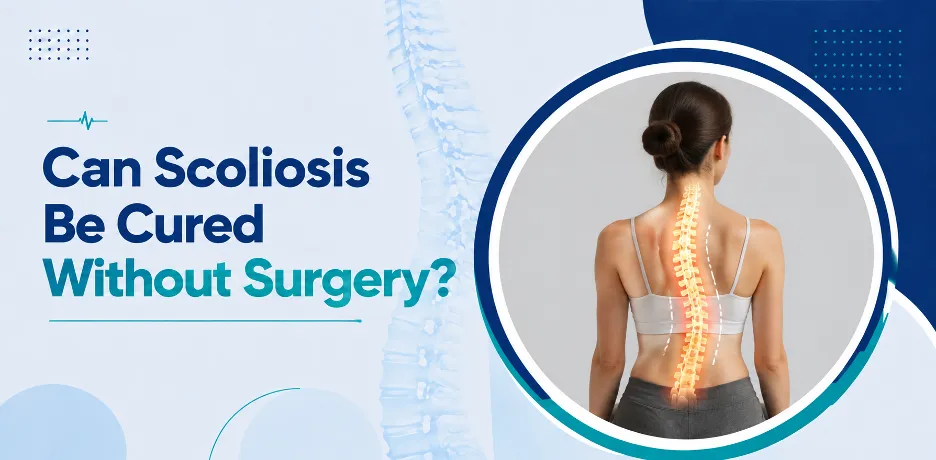
It’s usually the first question a parent asks after seeing an X-ray with a curved spine on it: can we fix this without an operation? Dr. Naveen Tahasildar, a leading scoliosis and spine surgeon in Bangalore, explains that the honest answer sits somewhere between yes and no, and depends heavily on what “cure” is actually being asked for.
Non-surgical treatment can stop a curve from getting worse, and in some flexible, postural cases, visibly reduce it. What it generally cannot do is fully straighten a structural curve back to a textbook-straight spine. That distinction, between halting progression and true correction, changes the entire conversation about what bracing and physiotherapy can realistically achieve.
“Parents want a simple yes or no, but scoliosis doesn’t work that way. Bracing and exercise are genuinely powerful tools, but their job is to hold the line during growth, not to erase the curve entirely.”
— Dr. Naveen Tahasildar, Spine Surgeon, Bangalore
Wondering whether your child’s curve can still be managed without an operation? A clinical assessment can tell you exactly what’s realistic. Book An Appointment
What "Cured Without Surgery" Actually Means
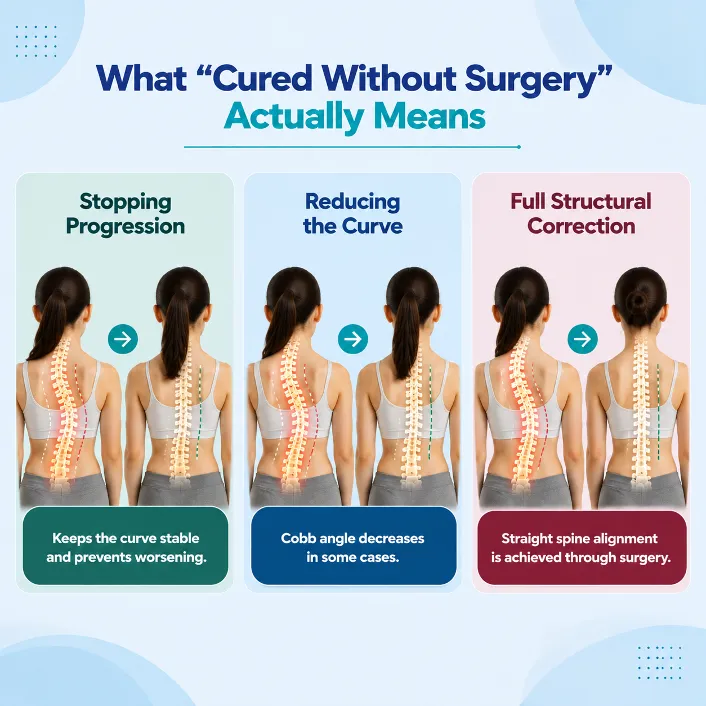
Before getting into treatment options, it helps to separate three different outcomes that often get lumped together under the word “cure.”
Stopping Progression:
This means the curve stays roughly where it is instead of worsening as the child grows. This is the primary, realistic goal of bracing, and it’s achieved successfully in a large majority of properly managed cases.
Reducing the Curve:
This means the Cobb angle measurably decreases. It happens sometimes, particularly with flexible, postural curves and disciplined exercise programmes, but it’s far less predictable than simply preventing worsening.
Full Structural Correction:
This means the spine returns to a normal, straight alignment. For a genuine structural curve, this outcome is realistically achieved through surgery, not through bracing or exercise alone.
Which Curves Respond Best to Non-Surgical Treatment
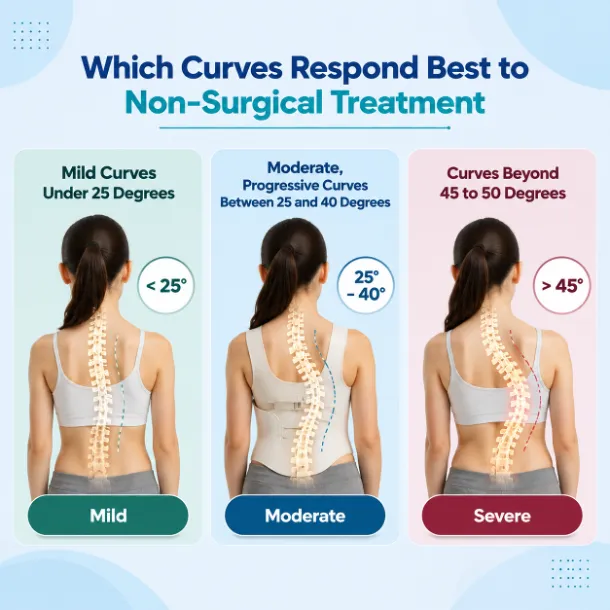
Not every curve behaves the same way, and the type of scoliosis largely decides how much non-surgical care can accomplish.
Mild Curves Under 25 Degrees:
Curves in this range, especially in a child who still has significant growth remaining, are usually just monitored every four to six months rather than actively treated, since many stay stable on their own.
Moderate, Progressive Curves Between 25 and 40 Degrees:
This is the range where bracing has the strongest evidence behind it. Worn consistently during the remaining growth years, a brace can prevent a large share of these curves from ever reaching the threshold where surgery becomes necessary.
Curves Beyond 45 to 50 Degrees:
At this severity, bracing and exercise on their own rarely hold the curve steady, and the conversation usually shifts toward scoliosis correction surgery, particularly if the curve is still actively progressing or affecting lung function.
According to information published by the American Academy of Orthopaedic Surgeons, bracing can help prevent a curve from getting worse but isn’t expected to improve an existing curvature on its own, which is an important distinction for families weighing their options.
What the Evidence Actually Says About Bracing and Exercise
Bracing:
The Best-Studied Non-Surgical Option Bracing has the strongest research behind it of any non-surgical treatment for scoliosis. A landmark US trial found that consistent bracing significantly reduced the number of high-risk curves that went on to need surgery, which is why it remains the standard first-line treatment worldwide for progressive curves during growth.
Schroth and Scoliosis-Specific Exercise:
Physiotherapy methods built specifically around scoliosis, rather than generic back exercises, have shown promise in slowing progression in milder curves and are increasingly used alongside bracing rather than instead of it. Details on how these physiotherapy-led programmes are structured are covered in the Bracing for Scoliosis.
What Doesn’t Have Strong Evidence:
General physical therapy, yoga, chiropractic adjustments, and similar approaches may ease discomfort and support overall fitness, but there’s no reliable evidence that they change the trajectory of the curve itself. They’re reasonable as supportive care, not as a stand-alone treatment plan.
Curious whether your specific curve is a good candidate for bracing? An assessment of the Cobb angle and remaining growth potential will tell you. Book An Appointment
When Non-Surgical Treatment Isn't Enough
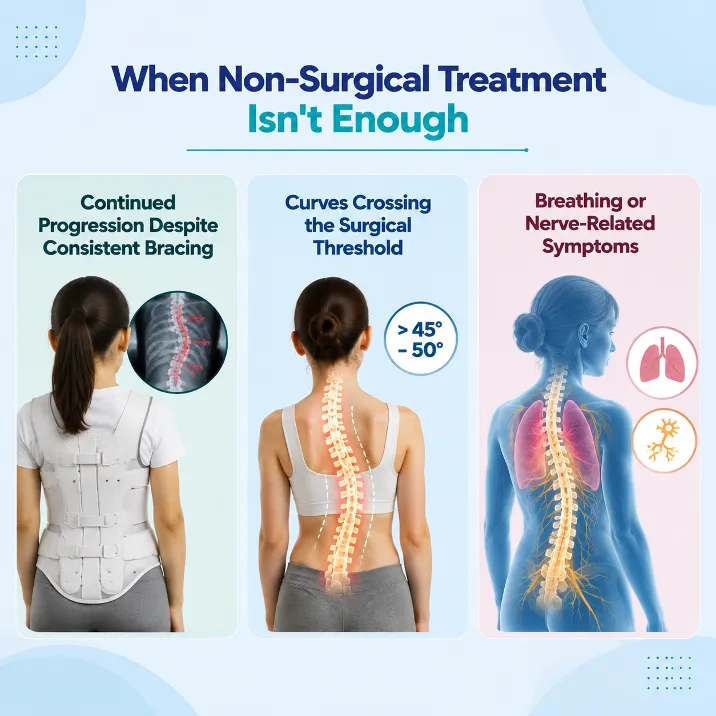
Even with a well-fitted brace and consistent wear, a portion of curves continue progressing, and it helps to know upfront what signals that shift.
Continued Progression Despite Consistent Bracing:
If the curve keeps increasing on repeat X-rays despite genuine, consistent brace wear, that’s a sign the non-surgical approach has reached its limit for that particular curve.
Curves Crossing the Surgical Threshold:
Once a curve passes roughly 45 to 50 degrees, particularly in a child who still has growth remaining, the risk of continued progression into adulthood rises sharply, and surgical correction is usually discussed at this point.
Breathing or Nerve-Related Symptoms
A severe curve that starts to restrict lung capacity or presses on nerve structures moves the conversation from “can this be managed” to “does this need to be corrected,” regardless of how well bracing has worked up to that point.
Why Choose Dr. Naveen Tahasildar for Diagnosis and Treatment?
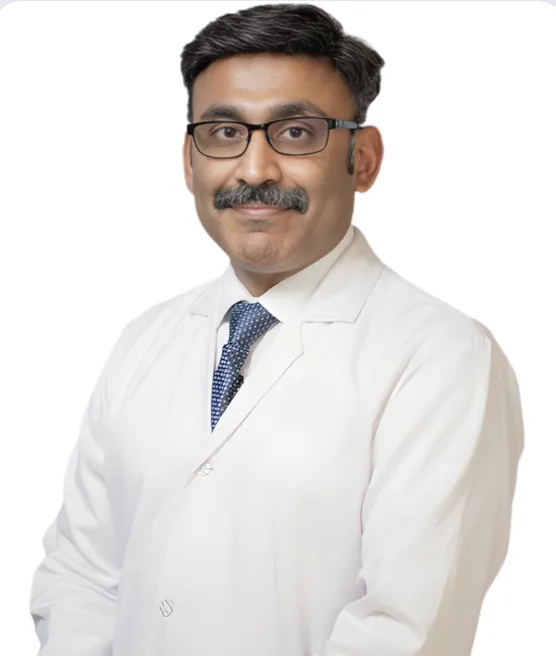
Dr. Naveen Tahasildar brings more than 18 years of dedicated spine experience and has performed over 100 scoliosis corrections at his Bangalore practice, and his approach always starts with the least invasive option that genuinely fits the curve in front of him. You can read more about his training and fellowship background on the About Dr. Naveen Tahasildar page.
The process starts with a standing X-ray to establish the exact Cobb angle, followed by an assessment of the child’s remaining growth potential using bone age markers. Curves that are mild or moderate, and where significant growth remains, are typically started on observation or bracing, with follow-up X-rays every few months to track the trend rather than a single snapshot.
Only when a curve is severe at presentation, or shown to be progressing despite proper conservative treatment, does the conversation move toward scoliosis correction surgery, and even then, options such as smaller-incision techniques are considered where the curve pattern allows for it.
“I tell every family the same thing at the first visit: we’re going to try the least invasive path that can genuinely work for this curve, and we’ll only move beyond it if the numbers on the X-ray tell us we have to.”
— Dr. Naveen Tahasildar, Spine Surgeon, Bangalore
Get a clear, honest opinion on whether your child’s curve can be managed without surgery. Book An Appointment with Dr. Naveen Tahasildar’s clinic in Bangalore.
Conclusion
Scoliosis can often be managed, and sometimes meaningfully improved, without surgery, but “cured” is the wrong word for what bracing and exercise typically achieve. Their real strength is in stopping a growing curve from reaching the point where surgery becomes the only remaining option. Getting the timing right, starting non-surgical treatment while the curve is still mild and flexible, is what makes the biggest difference to whether surgery is ever needed at all.
FAQs
1. Can a scoliosis curve fully straighten without surgery?
Rarely, for a true structural curve. Non-surgical treatment is far more effective at stopping a curve from worsening than at reversing it completely, though mild, flexible curves can sometimes improve with consistent exercise.
2. How long does a child need to wear a brace for scoliosis?
Most bracing protocols call for 16 to 23 hours a day until the child’s spine has finished growing, which for many adolescents means several years of consistent wear.
3. Does exercise alone stop scoliosis from progressing?
On its own, general exercise hasn’t been shown to reliably stop progression. Scoliosis-specific physiotherapy programmes have better evidence, particularly for milder curves, but are usually most effective alongside bracing rather than as a replacement for it.
4. At what curve size does surgery become necessary?
Surgery is generally considered once a curve crosses roughly 45 to 50 degrees, especially if it’s still progressing, though the exact threshold depends on the child’s age, remaining growth, and overall symptoms.
5. Can adults manage scoliosis without surgery?
Yes, in many cases. Adult scoliosis often causes far more pain-related symptoms than childhood curves, and many adults are managed successfully with physical therapy, activity modification, and pain management rather than surgery.