📞 Call Now

Bracing for Scoliosis in Bangalore

Bracing for scoliosis in Bangalore is a non-surgical treatment used to stop or slow the progression of a spinal curve in growing children and teenagers. It is one of the most effective tools available when a curve is caught early, and for many families, the right brace at the right time means surgery is avoided altogether. Dr. Naveen Tahasildar’s dedicated scoliosis treatment programme is built around exactly this principle: most children never need surgery, and bracing is often the difference-maker that keeps it that way.

Bracing is not a one-size-fits-all solution. It depends on the child’s age, how much growth remains, the size and flexibility of the curve, and how consistently the brace is worn. Parents are guided through every part of this decision, from choosing the right brace type to understanding the wear schedule, so bracing becomes a manageable part of daily life rather than a source of stress for the whole family.

According to Dr. Naveen Tahasildar, “Bracing works best when parents understand why it matters, not just that it’s been prescribed. A brace worn 18 hours a day with full understanding does far more good than one worn reluctantly for a few hours here and there.”

Book a Consultation with Dr. Naveen Tahasildar

What Is Scoliosis Bracing?

Scoliosis bracing is the use of a custom-fitted external device worn around the torso to apply gentle, corrective pressure on a growing spine. The brace doesn’t reverse an existing curve, but in a child who is still growing, it can guide the spine to grow straighter and prevent the curve from getting worse. Bracing is most effective when started while significant growth potential remains, which is why early diagnosis matters so much in adolescent scoliosis.

Main Goals of Scoliosis Bracing
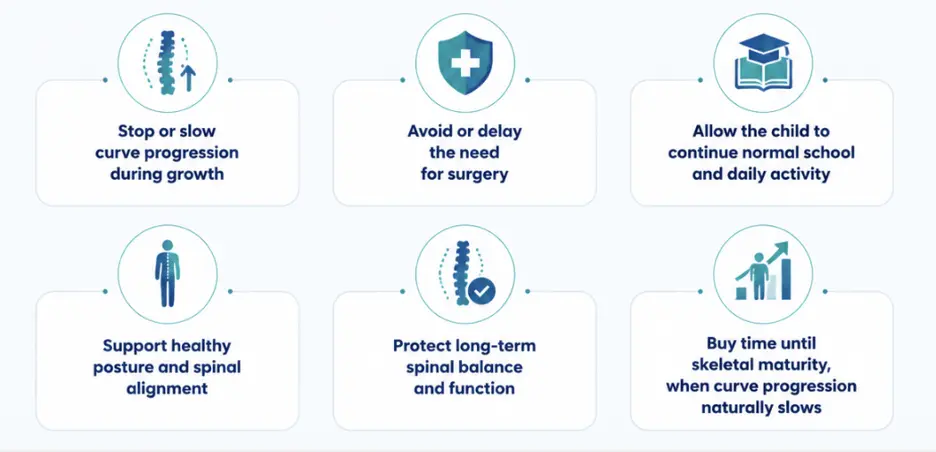
Stop or slow curve progression during growth
Avoid or delay the need for surgery
Allow the child to continue normal school and daily activity

Support healthy posture and spinal alignment
Protect long-term spinal balance and function
Buy time until skeletal maturity, when curve progression naturally slows

When Is Bracing Recommended?

Not every child with scoliosis needs a brace, and not every brace candidate needs the same type. Dr. Naveen Tahasildar evaluates each case individually, considering curve size, location, flexibility, and how much growth the child has left, before recommending bracing over observation or scoliosis correction surgery.

Curve Size Between 20 and 40 Degrees

Bracing is typically most effective for curves in this moderate range. Smaller curves are usually observed, while significantly larger curves may need a different approach.

Significant Growth Remaining

Bracing works by guiding spinal growth, so it is most useful in children and teenagers who have not yet reached skeletal maturity. A bone age assessment helps determine how much growth potential remains.

Evidence of Curve Progression

When X-rays taken a few months apart show the curve is increasing, bracing is often recommended to prevent further progression before it reaches a stage where surgery becomes necessary.

Flexible Curves

Curves that show some correction on bending X-rays tend to respond better to bracing than very rigid curves, which may need closer monitoring or a different treatment plan.

Types of Braces Used for Scoliosis

Different brace designs suit different curve patterns, ages, and lifestyles. The right choice is made after a full clinical and radiological assessment.

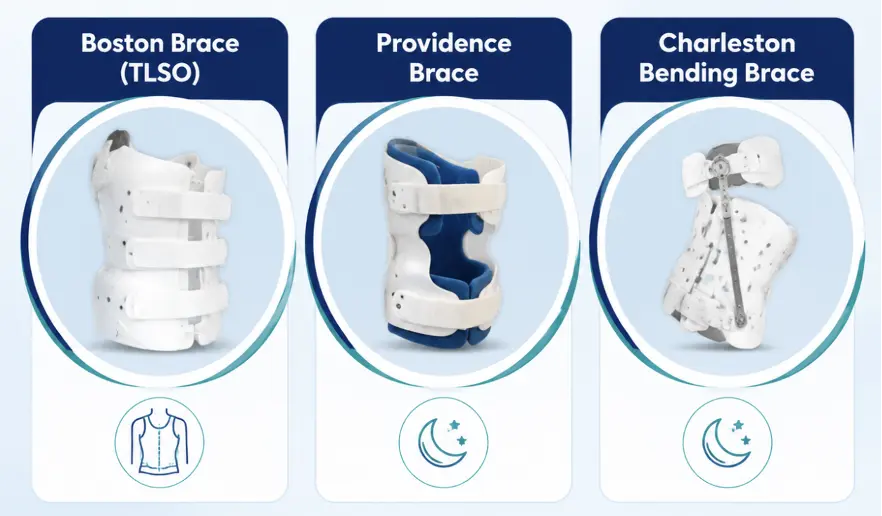
Boston Brace (TLSO)

The most commonly used brace for adolescent idiopathic scoliosis, it is a rigid, underarm brace custom-moulded to the child’s body, typically worn 16 to 23 hours a day depending on curve severity.

Providence Brace

Designed to be worn only at night, this brace applies stronger corrective forces while the child sleeps, and can suit certain flexible curve patterns without disrupting school and daily activity.

Charleston Bending Brace

Also a nighttime brace, it bends the spine beyond its natural correction point while lying down, and is generally reserved for specific single curve patterns.

How Bracing Works: Wear Schedule and Monitoring

Consistency is the single biggest factor in whether bracing succeeds. Most effective bracing protocols call for 16 to 23 hours of wear per day, with the brace removed only for bathing, skin checks, and specific physical activities as advised.

Regular Follow-Up X-Rays

X-rays are repeated every 4 to 6 months to confirm the curve is stable or improving. Adjustments to the brace or wear schedule are made based on these results.

Combining Bracing with Physiotherapy

Scoliosis-specific physiotherapy, such as the Schroth method, is often used alongside bracing to strengthen postural muscles and support the brace’s corrective effect.

Skin and Comfort Checks

Regular skin checks help prevent pressure sores or irritation, and brace adjustments are made as the child grows to maintain both comfort and correction.

Book a Consultation with Dr. Naveen Tahasildar

How Dr. Naveen Tahasildar Plans Bracing Treatment

Dr. Naveen Tahasildar’s approach to bracing is part of a wider, conservative-first philosophy toward paediatric and adolescent scoliosis treatment, where surgery is considered only when non-surgical options are no longer enough to protect the spine.

Detailed Curve Assessment

Standing X-rays, bending films, and, where needed, MRI help determine the exact curve pattern, flexibility, and any underlying cause before a bracing plan is finalised.

Growth and Maturity Evaluation

Bone age and growth remaining are assessed to determine how long bracing will likely be needed and how aggressively the curve should be monitored.

Custom Brace Fitting

Braces are custom-moulded to each child, since a poorly fitted brace reduces both comfort and effectiveness. Fit is reviewed and adjusted as the child grows.

Ongoing Family Guidance

Parents are supported through the emotional and practical side of bracing, from school routines to sports participation, so the family feels equipped rather than overwhelmed.

Benefits of Bracing for Scoliosis

Different brace designs suit different curve patterns, ages, and lifestyles. The right choice is made after a full clinical and radiological assessment.

Avoids or Delays Surgery

Successful bracing can prevent a curve from ever reaching the threshold where surgery becomes necessary.

Preserves Normal Childhood Activity

With the right brace type and schedule, most children continue school, hobbies, and social activities largely unaffected.

Non-Invasive and Reversible

Unlike surgery, bracing carries no surgical risk and can be adjusted or stopped as the child’s growth and curve status change.

Buys Critical Time

Even when bracing doesn’t fully stop progression, it can slow it enough to delay surgery until the child is older and closer to skeletal maturity, often improving surgical outcomes.

What Happens If Bracing Doesn’t Work?

Despite consistent wear, some curves continue to progress, particularly larger or more rigid ones. When a curve crosses the surgical threshold, usually around 45 to 50 degrees, or continues worsening despite bracing, scoliosis correction surgery may be the next appropriate step. This decision is never made lightly, and families are walked through exactly why bracing is no longer sufficient before any surgical plan is discussed.

Why Choose Dr. Naveen Tahasildar for Scoliosis Bracing in Bangalore?

Dr. Naveen Tahasildar has over 18 years of focused experience in spine and scoliosis care, having performed 100+ scoliosis corrections and guided many more families through successful non-surgical treatment. His honest, conservative-first approach means bracing is recommended only when it’s genuinely the right tool, not a default step before surgery. Families can read more about his approach and training on his spine surgeon profile, and review real outcomes in his case studies.

Key Reasons Parents Choose Him

Dedicated experience in paediatric and adolescent scoliosis
Honest, non-surgical-first treatment philosophy
Custom brace planning based on individual curve patterns
Regular monitoring to catch progression early
Clear, ongoing guidance for parents and children
Seamless transition to surgical care if it ever becomes necessary

Book a Consultation with Dr. Naveen Tahasildar

FAQs on Scoliosis Correction Surgery in Bangalore

1. How many hours a day does a scoliosis brace need to be worn?

Most rigid daytime braces are prescribed for 16 to 23 hours a day, depending on curve severity, while some nighttime-only braces need to be worn just during sleep. The exact schedule depends on the brace type and the child’s curve.

2. Can bracing completely cure scoliosis?

Bracing does not reverse an existing curve, but in a growing child, it can effectively stop or slow progression, often preventing the curve from ever reaching a stage where surgery is needed.

3. At what age is bracing most effective?

Bracing works best in children and teenagers who still have significant growth remaining, typically before or during the early stages of puberty, since it relies on guiding future spinal growth.

4. Will bracing affect my child's daily activities or sports?

Most children continue school and many activities while wearing a brace, though some sports may need to be paused or modified during active wear hours. Your specialist will guide activity-specific recommendations.

5. What happens if my child doesn't wear the brace as advised?

Inconsistent wear significantly reduces the brace’s effectiveness and increases the chance the curve will continue progressing, potentially leading to a need for surgery that might otherwise have been avoided.

References:

  1. Scoliosis Research Society: Bracing for Scoliosis
  2. Cleveland Clinic: Scoliosis Bracing