
Congenital Scoliosis Treatment in Bangalore
Congenital scoliosis is a spinal curvature that a child is born with, caused by abnormal formation of one or more vertebrae during the early weeks of pregnancy. Because it is present from birth, it is often detected earlier than other types of scoliosis, sometimes on a prenatal scan, and sometimes only later when a visible curve or asymmetry appears as the child grows.
Unlike idiopathic scoliosis, congenital scoliosis develops in a spine that did not form correctly to begin with, which means treatment planning has to account for the specific bone abnormality as well as the curve itself. Dr. Naveen Tahasildar provides specialised evaluation and treatment for congenital scoliosis in Bangalore, with careful monitoring, bracing where appropriate, and surgical correction planned around each child’s unique spinal anatomy.
Book a Consultation with Dr. Naveen Tahasildar
What Is Congenital Scoliosis?
Congenital scoliosis results from a failure of the vertebrae to form or separate properly while the baby’s spine is developing in the womb, typically within the first six to eight weeks of pregnancy. This can lead to vertebrae that are wedge-shaped, only partially formed, or fused together, any of which can cause the spine to grow unevenly and curve to one side as the child develops.
Because the underlying bone abnormality is fixed at birth, congenital scoliosis behaves differently from scoliosis that develops later in an otherwise normal spine. The curve’s progression depends heavily on which vertebrae are affected, how they are malformed, and how much growth potential remains on each side of the spine.
How Is It Different from Idiopathic Scoliosis?
Idiopathic scoliosis develops in a spine with normally formed vertebrae and has no single identifiable cause, whereas congenital scoliosis is caused directly by a structural bone defect present from birth. This difference matters because congenital curves can be far more unpredictable, with some remaining stable for years and others progressing rapidly during specific growth phases. Families can read more about the more common form through the page on idiopathic scoliosis in Bangalore to understand how the two conditions are managed differently.
Why Does It Happen?
The exact reason vertebrae fail to form correctly is not always known, though it is believed to relate to disruptions during early embryonic development. According to the American Academy of Orthopaedic Surgeons, congenital scoliosis can sometimes occur alongside other developmental issues affecting the heart, kidneys, or spinal cord, which is why children diagnosed with it are often screened for related conditions.
Types of Vertebral Abnormalities
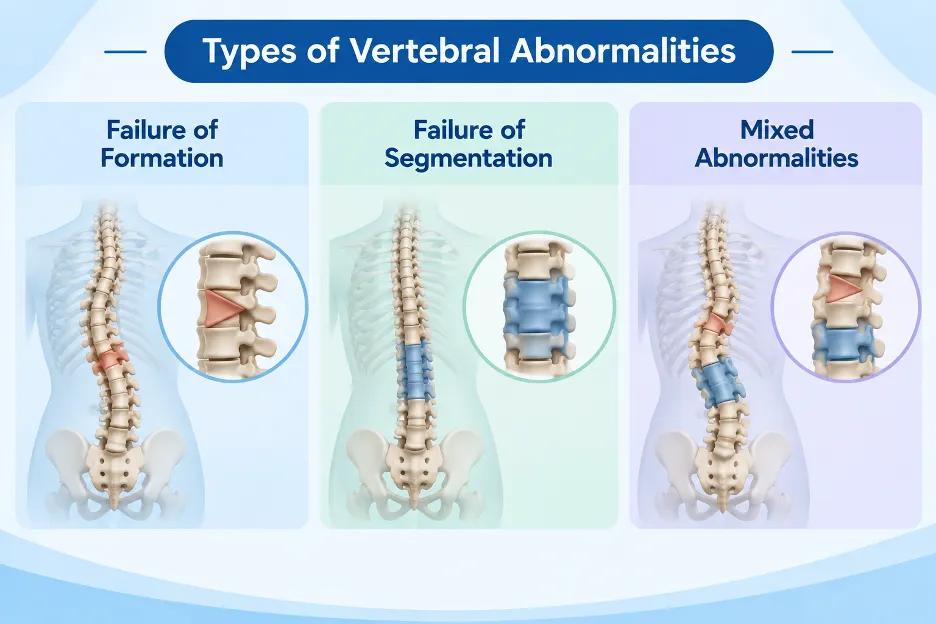
Congenital scoliosis is classified by the type of vertebral defect involved, and this classification is one of the strongest predictors of how the curve is likely to behave over time.
Failure of Formation
This occurs when part of a vertebra does not develop, resulting in a wedge-shaped or hemivertebra. Depending on its location and whether it is balanced by a normal vertebra on the opposite side, a hemivertebra can cause anything from a mild curve to a rapidly progressive one.
Failure of Segmentation
This happens when two or more vertebrae fail to separate properly and remain fused together, either on one side or completely. A one-sided (unsegmented) bar is often associated with faster curve progression, since growth continues unevenly on the unaffected side while the fused side stays fixed.
Mixed Abnormalities
Some children have a combination of formation and segmentation defects, which can make the curve more complex and harder to predict. These cases usually need more detailed imaging and more frequent monitoring to plan the right treatment timing.
Signs and Symptoms to Watch For
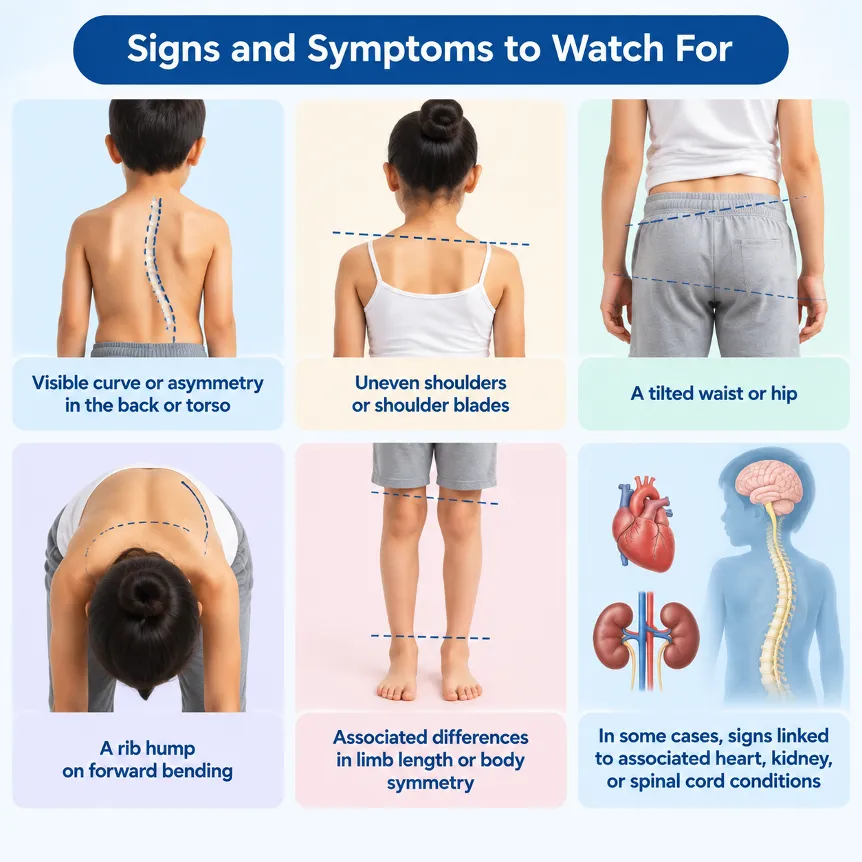
Congenital scoliosis is sometimes picked up on a prenatal ultrasound, but many cases are only noticed after birth as the child grows and the spine’s uneven development becomes visible.
Visible curve or asymmetry in the back or torso
Uneven shoulders or shoulder blades
A tilted waist or hip
A rib hump on forward bending
Associated differences in limb length or body symmetry
In some cases, signs linked to associated heart, kidney, or spinal cord conditions
Because congenital scoliosis can be linked with other developmental conditions, an early and thorough evaluation is important even if the visible curve itself looks mild.
Book a Consultation with Dr. Naveen Tahasildar
How Congenital Scoliosis Is Diagnosed
Diagnosis focuses on understanding exactly which vertebrae are affected, how they are malformed, and whether any related organ or spinal cord conditions are present.
Clinical Examination
The doctor assesses posture, spinal alignment, shoulder and hip symmetry, and looks for any skin markings, dimples, or hair patches over the spine that can sometimes indicate an underlying spinal cord abnormality.
X-ray Imaging
Standing spinal X-rays are used to identify the exact vertebral defect, measure the Cobb angle, and track how the curve changes over time. Because congenital curves can progress unpredictably, X-rays are often repeated more frequently than in idiopathic scoliosis, especially during infancy and early childhood.
MRI and Additional Screening
An MRI of the spine is commonly recommended to check for associated spinal cord abnormalities, since these are more frequently found alongside congenital scoliosis than in idiopathic cases. Given the known association with other organ systems, doctors may also recommend a cardiac echocardiogram and a kidney ultrasound as part of a complete evaluation, in line with guidance from the Mayo Clinic on congenital scoliosis assessment.
Treatment Options for Congenital Scoliosis in Bangalore
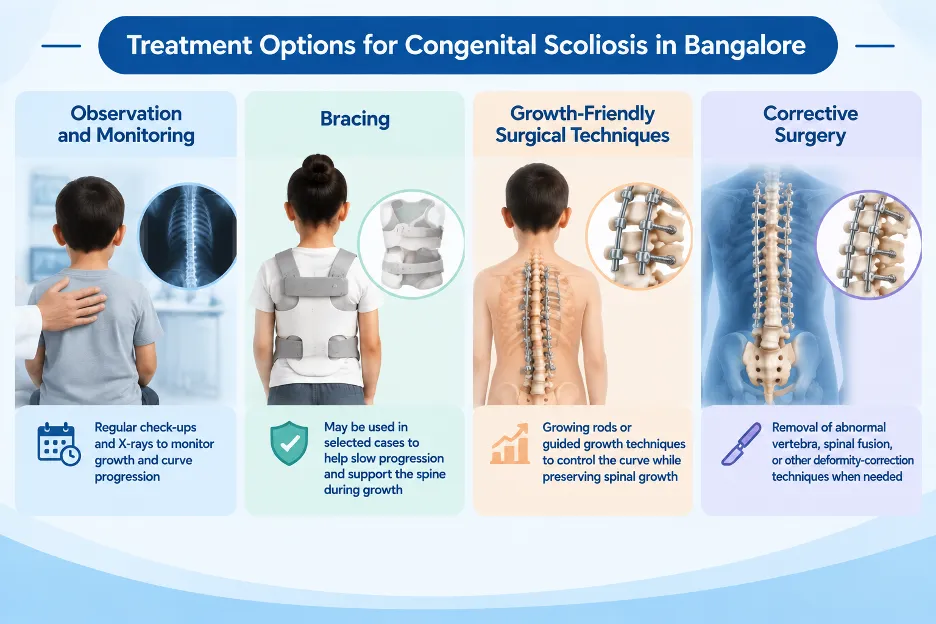
Treatment is planned around the specific vertebral abnormality, the child’s age, and how the curve is behaving over time, since congenital curves do not all follow the same predictable pattern.
Improved Spinal Alignment
For mild, stable curves with a lower risk of progression, regular monitoring with periodic X-rays allows the doctor to track the spine’s development and step in only if the curve begins to worsen.
Bracing
Bracing has a more limited role in congenital scoliosis compared to idiopathic scoliosis, since a brace generally cannot correct a curve caused by a fixed bone abnormality. It may still be used in select cases to slow progression or support the spine while a child grows, alongside close monitoring.
Growth-Friendly Surgical Techniques
In young children with progressive curves, growth-friendly options such as growing rods or guided growth techniques can help control the curve while preserving as much spinal growth and chest development as possible before more definitive correction is considered.
Corrective Surgery
When a curve is progressive, severe, or affecting posture and balance, surgical correction may involve removing the abnormal vertebra, spinal fusion, or other deformity-correction techniques depending on the defect. Families can learn more about the surgical process through the page on scoliosis correction surgery, which explains how neuromonitored surgery is planned to protect spinal cord and nerve function throughout the procedure.
Why Early Diagnosis Matters
Because congenital scoliosis is present from birth and some vertebral defects are known to progress quickly during specific growth windows, early diagnosis gives doctors the best chance to intervene before the curve becomes severe. Children diagnosed early can often be managed with less invasive techniques and closer, more strategic monitoring, rather than facing a more complex correction later. Regular paediatric check-ups and prompt evaluation of any visible spinal asymmetry remain the most reliable ways to catch congenital scoliosis at its earliest, most manageable stage.
Why Choose Dr. Naveen Tahasildar for Congenital Scoliosis Care?
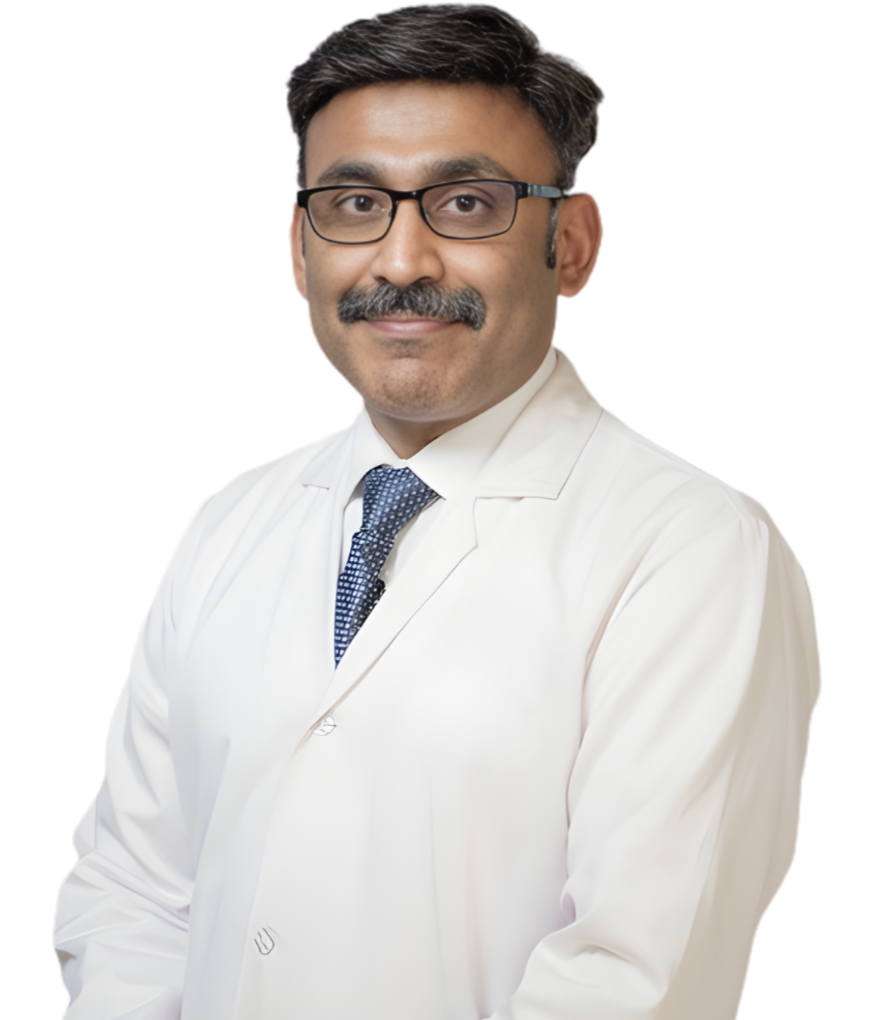
Dr. Naveen Tahasildar brings over 18 years of focused spine experience, including specialised training in complex paediatric spinal deformity. His treatment planning for congenital scoliosis is built around a detailed understanding of each child’s specific vertebral abnormality, using neuromonitoring and careful surgical technique to protect spinal cord function during correction. Patients can learn more about his background and approach on his scoliosis surgeon profile.
Book a Consultation with Dr. Naveen Tahasildar
FAQs on Scoliosis Correction Surgery in Bangalore
1. Is congenital scoliosis the same as idiopathic scoliosis?
No. Congenital scoliosis is caused by a bone abnormality present from birth, while idiopathic scoliosis develops in a normally formed spine with no single identifiable cause.
2. Can congenital scoliosis be detected before birth?
In some cases, yes. Certain vertebral abnormalities can be seen on a prenatal ultrasound, though many cases are only diagnosed after birth as the child grows and the curve becomes visible.
3. Does every child with congenital scoliosis need surgery?
No. Mild, stable curves may only need regular monitoring. Surgery is considered when the curve is progressive, severe, or affecting posture, balance, or spinal alignment.
4. Is congenital scoliosis linked to other health conditions?
It can be. Because the spine and other organs develop around the same time in early pregnancy, congenital scoliosis is sometimes associated with heart, kidney, or spinal cord abnormalities, which is why additional screening is often recommended.
5. At what age is congenital scoliosis surgery usually considered?
There is no single age, since it depends on the specific vertebral defect and how fast the curve is progressing. Some children need intervention in early childhood, while others can be monitored safely for several years before any correction is needed.