
Posterior Scoliosis Correction and Fusion in Bangalore
A severe spinal curve may impact one’s posture and balance, as well as cause discomfort. The surgical process of posterior scoliosis correction and fusion uses implants and bone grafts to correct and stabilize the spinal curve. It is usually recommended when the curve is severe or progressing.
According to Dr. Naveen Tahasildar, a spine surgeon in Bangalore, scoliosis surgery is not determined by the measurement of the curve alone. Several factors, including the age of the patient, spinal flexibility, symptoms, skeletal maturity, and the risk of progression, determine whether the surgery is required or not.
With 18+ years of experience, 100+ scoliosis surgeries, and 4,000+ spine surgeries, Dr. Naveen Tahasildar offers posterior scoliosis correction and fusion in Bangalore.
What Is Posterior Scoliosis Correction and Fusion?
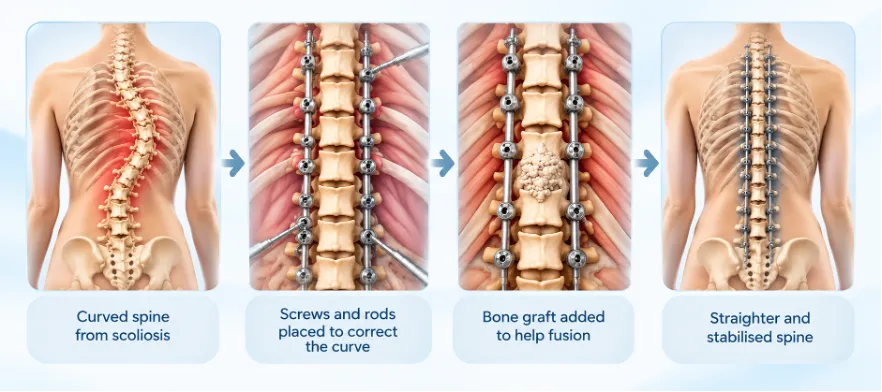
Posterior scoliosis correction and fusion are done by making an incision along the back. The surgeon places screws and rods to correct the spinal curvature and maintain spinal alignment.
Bone graft material is then added between selected vertebrae to encourage them to fuse into one solid structure. As a result, there will be no movement of the vertebrae involved in the fusing process.
This surgery helps achieve spinal realignment and prevents the curve from progressing.
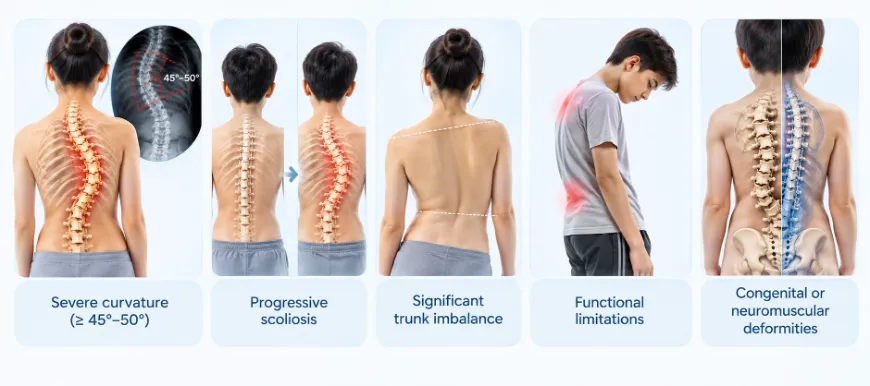
Who May Need Posterior Scoliosis Correction and Fusion?
Surgeries are performed only after examining individual clinical findings and expected benefits.
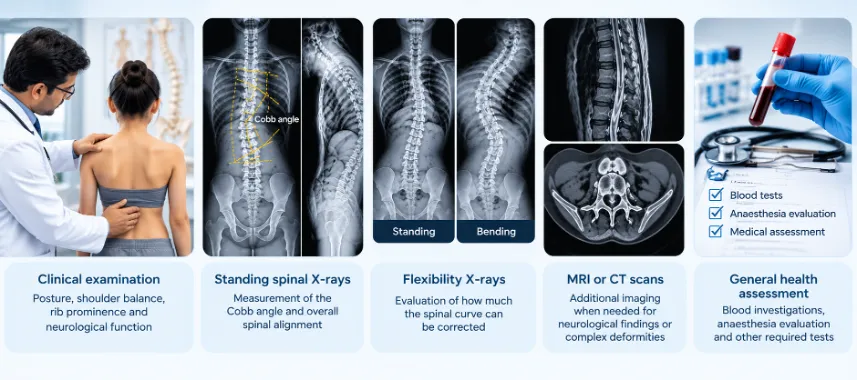
How the Spine Is Evaluated Before Surgery
These findings help determine the appropriate surgical levels and correction strategy.
The Procedure of Posterior Scoliosis Correction and Fusion in Bangalore: What to Expect
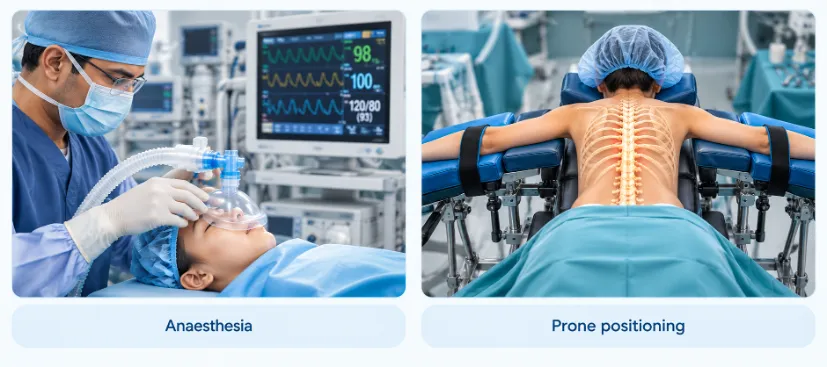
1. Anaesthesia and positioning
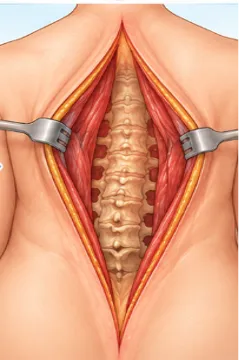
2. Surgical exposure
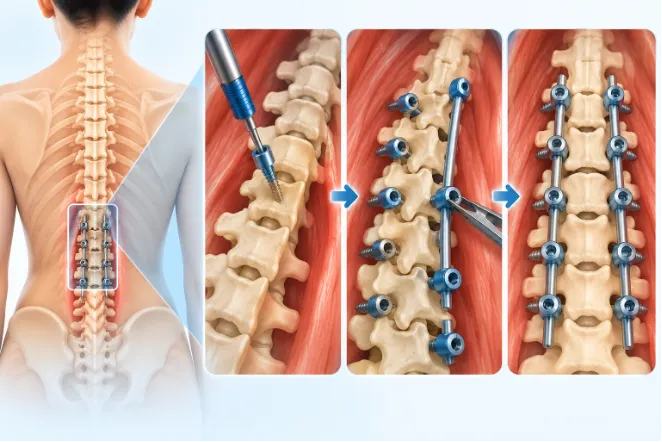
3. Implant placement
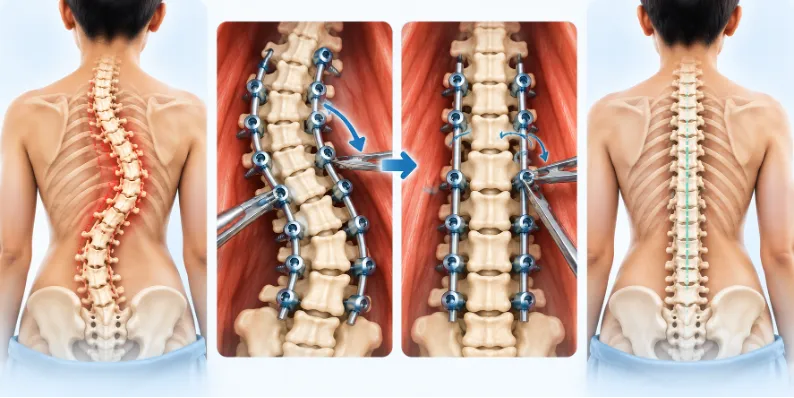
4. Curve correction
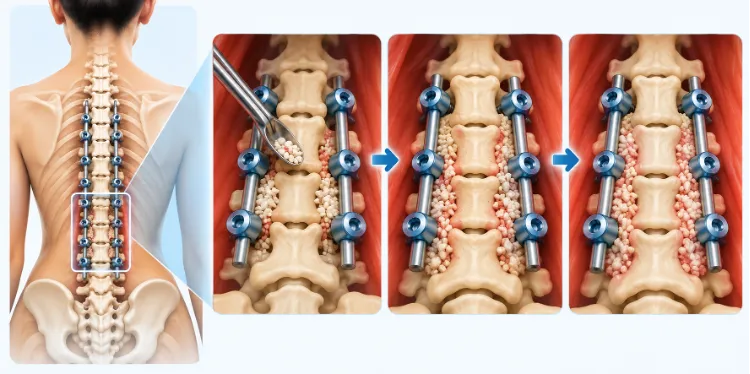
5. Bone grafting
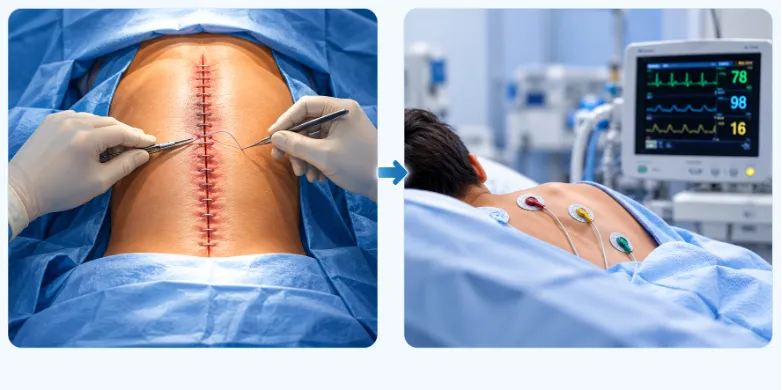
6. Closure and monitoring
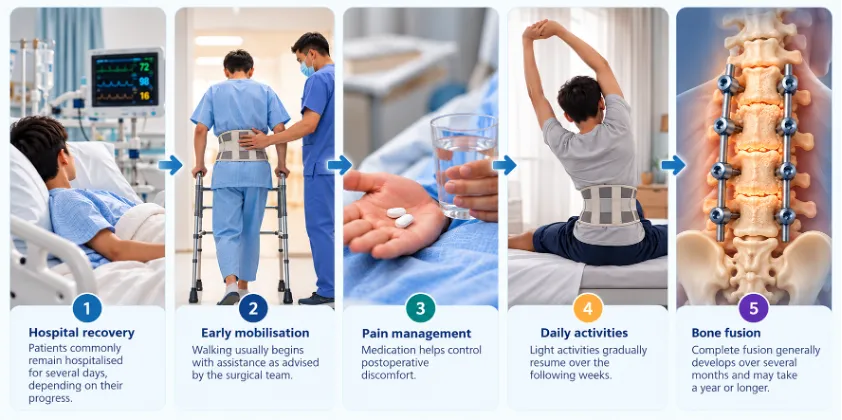
Recovery After Posterior Scoliosis Fusion
Heavy lifting, strenuous exercise, and sports are resumed only after medical clearance.
Possible Risks and Complications
Infection: Infection around the incision or surgical implants.
Bleeding: Bleeding during the procedure that may need transfusions of blood.
Nerve injury: Damage caused by rare nerve complications.
Problem with the implant: Loosening or breaking of the surgical implant.
Non-union: Failure in bone fusion.
There are other possible complications that may arise from anesthesia and blood clotting. The risk level varies individually.
Alternatives to Posterior Scoliosis Fusion
Not every spinal curve requires surgery. Depending on curve severity and skeletal maturity, alternatives include:
Observation: Periodic examinations and X-rays for mild, stable curves.
Bracing: Helps limit progression in selected growing adolescents.
Scoliosis-specific exercises: Support posture, strength, and functional mobility.
Physiotherapy: Helps manage muscular discomfort and maintain flexibility.
Other surgical approaches: Selected patients may qualify for different correction techniques.
Follow-Up Care After Scoliosis Surgery
Routine follow-up is essential in evaluating the healing process, positioning of the implants, spinal alignment, and fusion process. Postoperative care can be in the form of clinical examinations, periodic X-rays, wound evaluation, and physical activities. Instructions should be strictly adhered to concerning the exercises and lifting. Any increase in pain, fever, and wound discharge should be reported immediately.
When to See a Spine Specialist
Get in touch with a spine specialist for timely evaluation.