
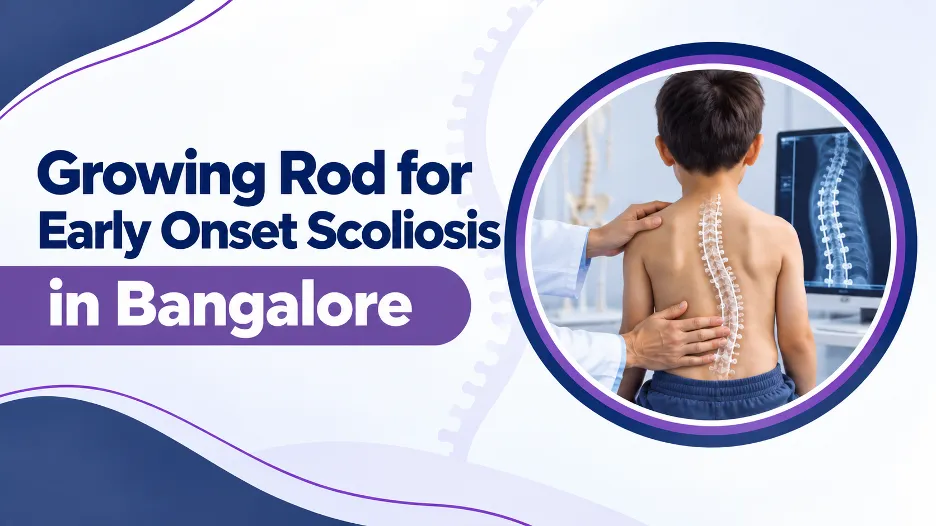
Growing Rod for Early Onset Scoliosis in Bangalore
A child’s spine needs room to grow, but early onset scoliosis can make that growth more challenging. When the spinal curve progresses at a young age, it may affect the shape of the back, chest development, and, in severe cases, lung function. Growing rods offer a surgical approach for dealing with the spinal curvature without fusing the main affected portion of the spine when the child is young.
According to Dr. Naveen Tahasildar, a prominent spine surgeon in Bangalore, one of the key challenges in treating scoliosis in young kids is controlling the spinal deformity without unnecessary restrictions of the future growth potential of the spine. It is important to evaluate the growth potential, flexibility of the curve, and general condition of the patient before considering growing rod surgery.
Being a seasoned spine surgeon with 18+ years of experience, performing more than 100 scoliosis surgeries and 4,000+ spine operations, Dr. Naveen Tahasildar provides comprehensive treatment of Growing Rod for Early Onset Scoliosis in Bangalore as part of the individualized approach to spinal deformity management. The treatment focuses on controlling curve progression, accommodating spinal growth and supporting the child’s long-term development.
Can scoliosis develop before a child reaches adolescence? Let’s explore how early spinal curvature affects growing children.
What Is Early Onset Scoliosis?
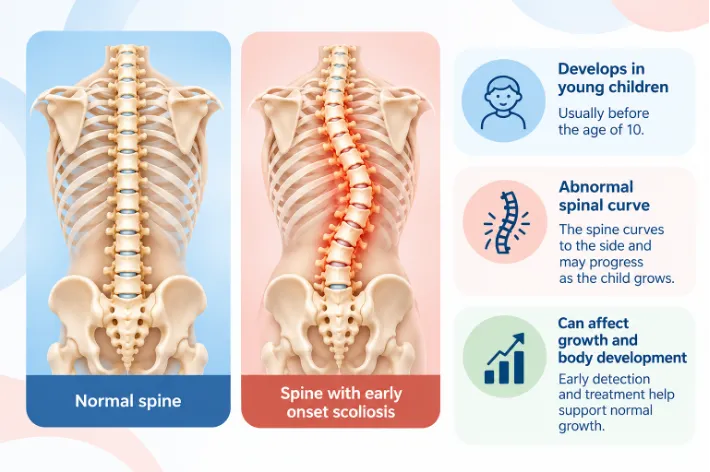
Early onset scoliosis is defined as a spinal curve occurring before age 10. This condition could either be idiopathic, congenital, neuromuscular, or associated with a syndrome.
Since the spine and thorax are still in their developmental phase, any progressive curve can affect trunk growth and, in some cases, even lung growth.
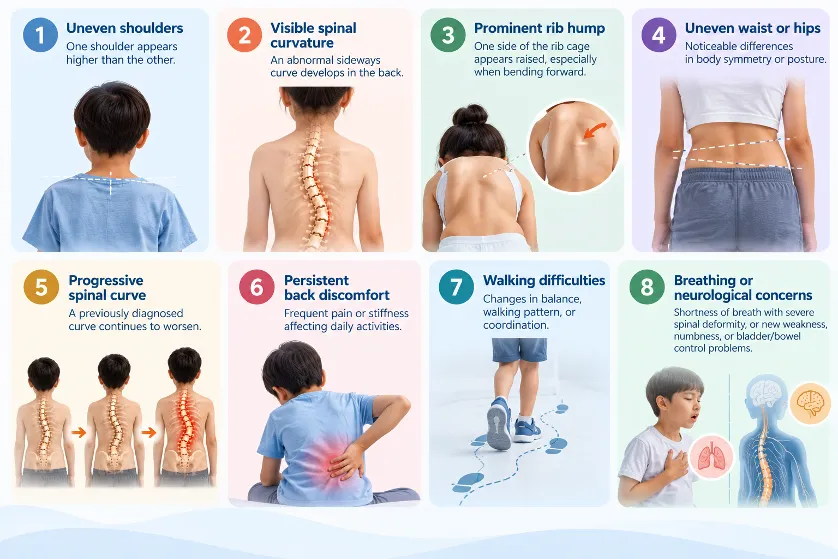
The usual symptoms are unequal shoulder blades, protruding rib cage, an asymmetrical trunk, or an increasingly visible spinal curve.
What Are Growing Rods?
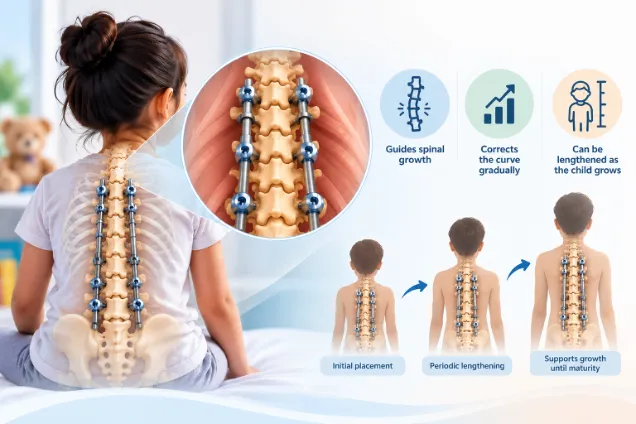
Growing rods are specialised spinal implants that can help manage scoliosis development in children while growing.
Growing rods are placed on selected vertebrae using anchors like screws or hooks. Unlike conventional spinal fusions, the rods can be adjusted depending on the child’s development.
It helps maintain correct alignment and delay definitive fusion when appropriate.
Do all growing rod systems work the same way? Let’s explore the main types used in scoliosis management.
Types of Growing Rods
Traditional Growing Rods
These rods require periodic surgical lengthening, generally under anaesthesia. Lengthening intervals vary according to growth and treatment requirements.
Magnetically Controlled Growing Rods
These systems allow selected rod lengthenings through an external magnetic controller, often during outpatient visits without another surgical incision.
Both systems require regular monitoring. The choice depends on spinal anatomy, curve characteristics, implant suitability, and clinical considerations.
When does a child’s spinal curve require surgical support? Let’s discuss the factors that influence treatment decisions.
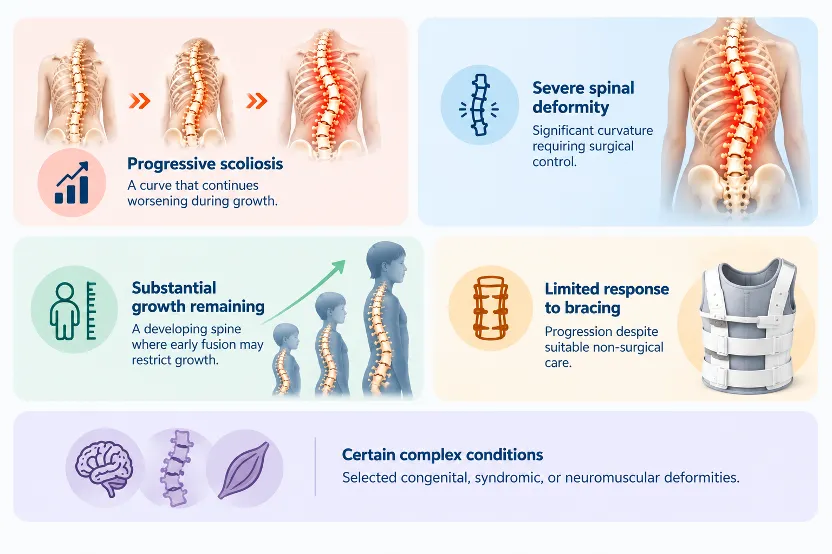
Who May Need Growing Rod Treatment?
Growing rods may be considered when a child has:
Not every child with early onset scoliosis needs surgery. Treatment depends on the individual curve and overall health.
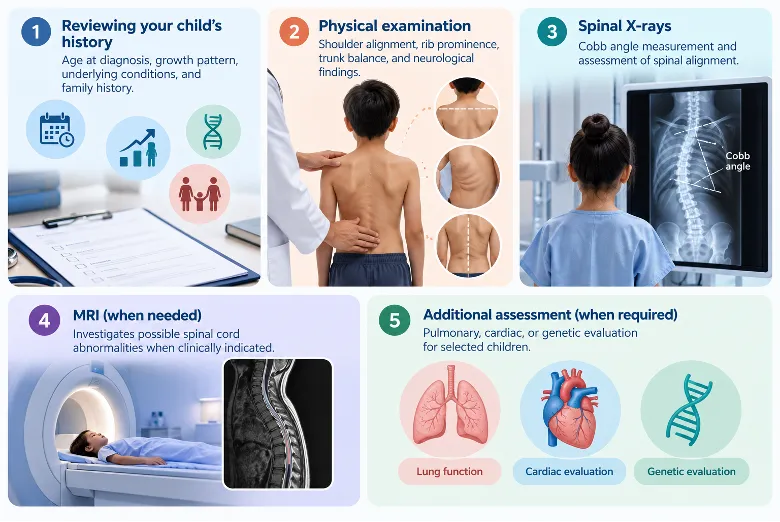
What tests help determine the right treatment for a growing spine? Let’s explore the assessment process.
How Early Onset Scoliosis Is Evaluated
A comprehensive evaluation includes:
The findings guide treatment selection and surgical planning.
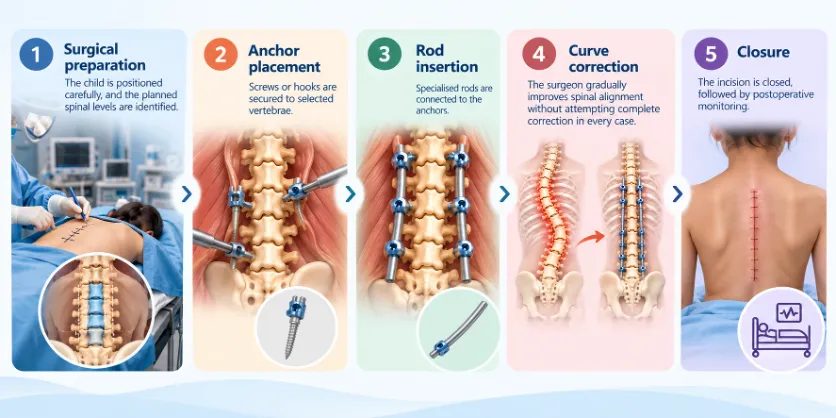
How are growing rods placed in a child’s spine? Let’s discuss the main steps involved in surgery.
Growing Rod Procedure: What to Expect
The procedure is performed under general anaesthesia and typically involves:
Neurological monitoring may be used during surgery to assess spinal cord function.
How do growing rods accommodate a child’s growth? Let’s explore the lengthening process and follow-up requirements.
Lengthening and Follow-Up Care
Rods need repeated lengthening for continued spinal growth.
In conventional cases, rods are lengthened via further surgeries. However, for magnetically controlled rods, the lengthening process is done in an outpatient setting.
There will be follow-ups which consist of spinal assessment, X-rays, assessment of the rods implanted, and growth monitoring.
Are growing rods associated with complications? Let’s understand the possible risks and their management.
Possible Risks and Complications of Growing Rods
Some of the possible complications may be:
Infections: These may occur around the surgical area or implants.
Implant failure: It can be characterized by a rod fracture, rod movement or anchorage failure.
Unplanned surgeries: Other surgeries to rectify implant failures.
Lengthening issues: Mechanical problems with rod lengthening.
Stiffness of spine: Lack of flexibility of spine or unwanted bone fusion.
Neuropathic problems: Rare complications due to nerve or spinal cord damage.
Repetitive procedures and anesthesia are some more factors that come into account while using traditional rods.
Are growing rods the only treatment for early onset scoliosis? Let’s explore other approaches that may be considered.
Alternatives to Growing Rods
Depending on the child’s age, curve severity, and underlying condition, alternatives include:
Serial casting: Gradual curve correction in selected young children.
Bracing: Supporting curve control during growth.
Observation: Monitoring mild, stable spinal curves.
VEPTR devices: Supporting thoracic growth in selected children with chest wall abnormalities.
Other growth-friendly surgery: Options such as tethering or guided-growth techniques in suitable cases.
The most appropriate approach depends on individual clinical findings.
When should a child’s spinal curvature be evaluated? Let’s identify the signs that require attention.
When to See a Spine Specialist
Consider consulting a spine specialist if your child shows:
Get in touch with a specialist for timely assessment.
Frequently Asked Questions
1. What is growing rod surgery?
2. At what age are growing rods used?
3. Are growing rods permanent?
Not necessarily. They may be removed or replaced, and some children eventually undergo definitive spinal fusion.
4. How often are growing rods lengthened?
Traditional rods are commonly lengthened every six months, although schedules vary. Magnetic systems may allow more frequent outpatient adjustments.
5. Can growing rods straighten scoliosis completely?
The primary goal is curve control while preserving growth. Complete correction is not always possible or appropriate.
6. Can growing rods break?
Yes. Rod breakage and implant loosening are recognised complications that may require further treatment.
7. Do magnetic growing rods require repeated surgery?
Routine lengthening may be performed without surgery, but additional operations can still become necessary.
8. Is spinal fusion required after growing rods?
Some children undergo final fusion after growth, while others may have different treatment plans based on their progress.
Disclaimer: The information shared in this content is for educational purposes and not for promotional use.