
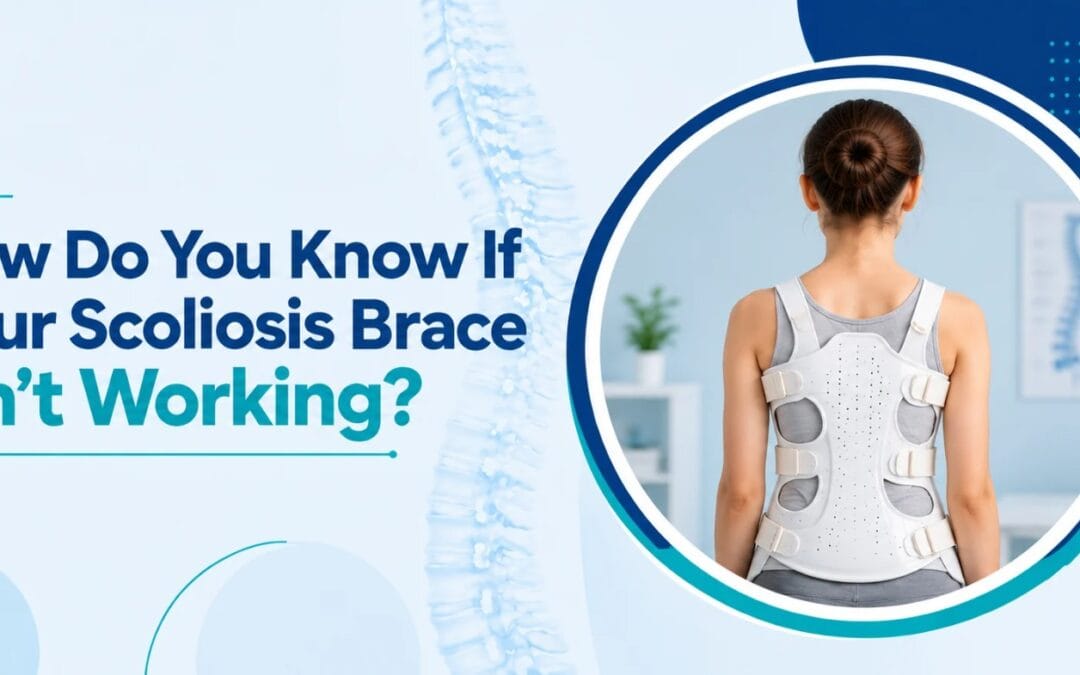
Scoliosis bracing is meant to hold a curve steady while a child grows, not just fit comfortably under clothing. The clearest sign it isn’t working shows up on follow-up X-rays, when the curve keeps advancing despite consistent, correct wear, well before any visible change appears.
According to Dr. Naveen Tahasildar, an expert in Scoliosis Treatment in Bangalore, “Parents often tell me the brace feels fine, the child seems comfortable, so they assume it’s working. Comfort isn’t the metric. The X-ray is. If the angle keeps climbing despite proper wear, we need to know that early, not after six more months have passed.”
Not sure if your brace is still doing its job? Book an appointment and get it reviewed now
What Are the Warning Signs a Scoliosis Brace Isn't Working?
A few clinical and physical markers point to a brace that isn’t controlling the curve. None should be ignored on their own.
Cobb Angle Progression on X-ray: A meaningful rise between scans, even with the brace worn as prescribed, is the strongest indicator of failure. This is measured, not guessed. It overrides how things appear externally.
Uneven Shoulders or Waistline Returning: If asymmetry that had improved starts reappearing, the brace may not be applying enough correction anymore. Growth spurts often expose this quickly. Fit and pressure points need rechecking.
Brace Fitting Loosely Between Visits: A brace that fit snugly last visit but feels loose weeks later usually means the body has grown or the curve has shifted. Correction is compromised either way. Refitting isn’t optional here.
Reduced Wear Time Due to Discomfort: Skin irritation or pressure sores that push a child to wear the brace less than prescribed directly reduce its effectiveness. Eighteen hours a day is the general benchmark. Falling short changes outcomes.
A proper scoliosis brace review checks fit, wear compliance, and imaging together, not one in isolation.
What Happens If Bracing Fails to Control the Curve?
When a brace stops holding the curve, next steps depend on how far it has progressed and how much growth remains.
Brace Modification First: Often the existing design or pressure points need adjusting before anything more drastic is considered. A refit can restore control. This is usually the first response, not surgery.
Increased Monitoring Frequency: Curves progressing despite bracing get watched more closely, sometimes every three months instead of six. Catching further movement early keeps options open.
Reassessing Surgical Thresholds: If the curve crosses into a higher degree range despite bracing, surgical correction enters the conversation. This isn’t automatic. It follows clear, measurable criteria.
Bracing failure looks different in younger children than in teenagers closer to skeletal maturity. Our piece on scoliosis in teens covers how age affects these decisions.
Why Choose Dr. Naveen Tahasildar for Scoliosis Bracing in Bangalore?
Dr. Naveen Tahasildar brings over 18 years of experience in spine surgery, backed by an MBBS, MS in Orthopaedics, and fellowships abroad in spine treatment. He favours the least invasive technique that can still resolve the problem, and turns to open surgery only when a smaller approach genuinely will not work.
Before anything gets decided, there’s detailed imaging and a proper clinical workup. Because here’s the thing, two patients can walk in with almost the same brace history and still need completely different next steps. Treating every case the same way just doesn’t hold up. Call +91 7676090119 to book your consultation.
FAQs
How much curve progression means a brace has failed?
Around six degrees or more on follow-up X-rays despite correct wear.
How many hours a day should a scoliosis brace be worn?
Around 18 hours daily for most prescribed rigid braces.
Can a loose brace still be effective?
No, a loose fit reduces correction and needs prompt refitting.
How often should brace progress be checked?
Every 4 to 6 months, or sooner if signs appear.
References:
NIAMS, National Institutes of Health — Scoliosis Health Topic: https://www.niams.nih.gov/health-topics/scoliosis
Weinstein SL, et al. — Effects of Bracing in Adolescents with Idiopathic Scoliosis, PubMed: https://pubmed.ncbi.nlm.nih.gov/24047455/
Disclaimer:This blog is for general educational purposes only and does not replace a professional brace fitting or X-ray review. Consult a spine specialist if you notice changes.